
Kling AI Kling 4.0 Officially Launches, Focusing on High Dynamics and Complex Camera Movements
Kling AI's next-generation video generation model Kling 4.0 has officially launched, with realism, controllability, and professionalism as its core directions, focusing on high-dynamic and complex camera-movement scenarios. The new version improves continuity in high-speed motion and shot choreography, supports native generation of up to 30 seconds per run, and enables long takes and continuous storytelling; Omni Reference can combine up to 15 assets and supports up to 10 keyframes. The model also introduces output capabilities such as 10-bit HDR, 4K, and 21:9 aspect ratios, and integrates MCP and CLI, advancing AI video toward professional expression tools.
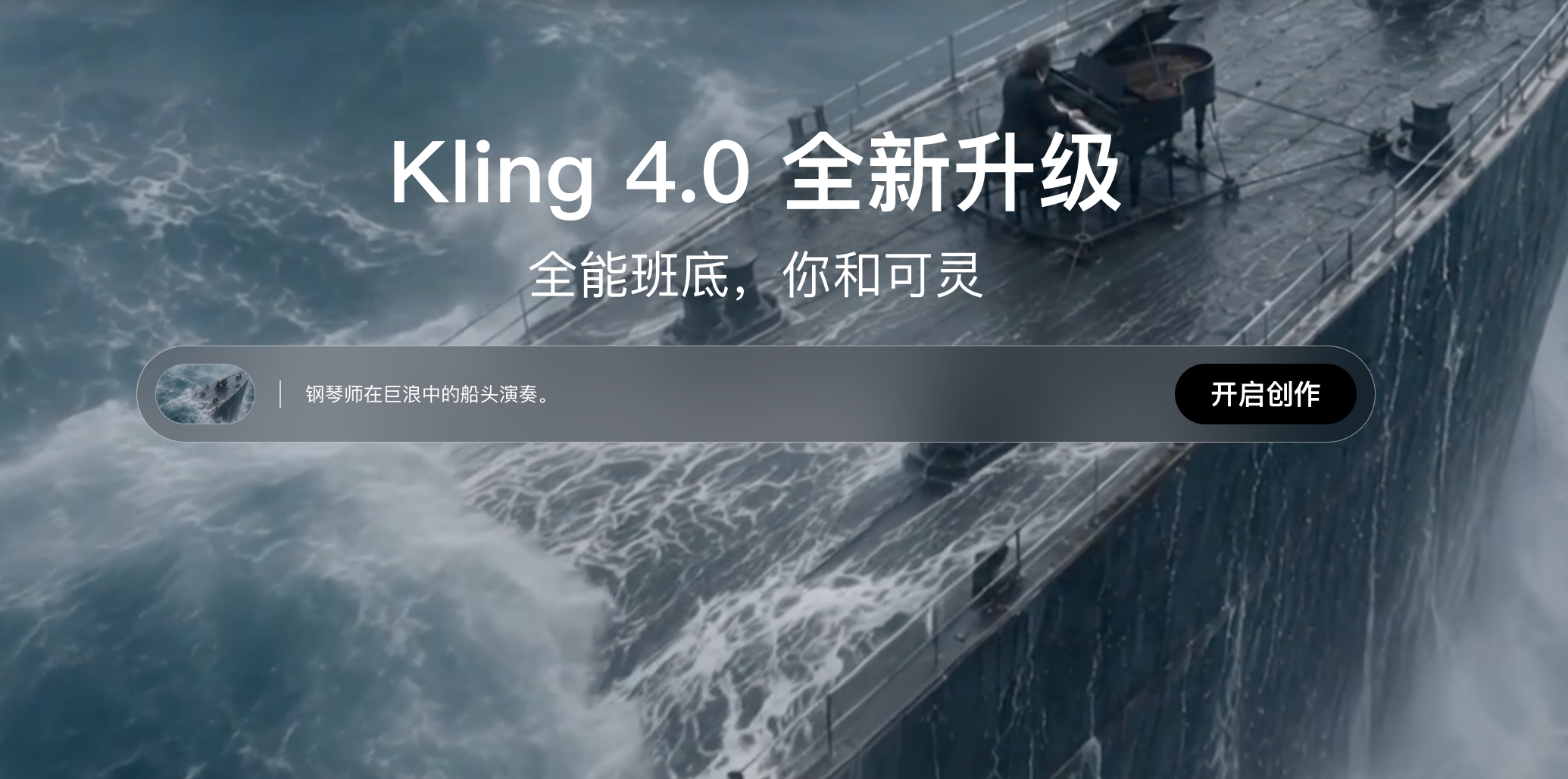
Kling AI's next-generation video generation model Kling 4.0 officially launched on October 15. This version centers its upgrades on realism, controllability, and professionalism, focusing on high-dynamic and strong camera-movement video creation scenarios, aiming to further advance AI video from an efficiency tool toward a professional expression tool. Previously, Kling 4.0 began internal testing at the end of September, while Kling 4.0 Flash was introduced for high-frequency creation scenarios.
In terms of dynamic performance, Kling 4.0 improves visual stability and process continuity under complex shot choreography such as high-speed motion, continuous action, tracking shots, and orbiting shots. According to the original article, the new version builds on the previous technical roadmap and moves further toward production-grade delivery, handling large-scale scenes and complex camera-movement requirements more confidently.
In terms of generation duration and narrative control, Kling 4.0 extends native generation time to up to 30 seconds per run, supporting long takes and continuous storytelling so that action sequences, scene changes, and emotional development can be presented more completely. The model also introduces director-like thinking to expand prompts, with input text length up to 8000 tokens, enabling creators' intent to be conveyed more fully and precisely.
The Omni Reference feature is a key part of this upgrade. In a single task, the model supports flexible combinations of assets such as images, videos, subjects, and voice timbres, with up to 15 items in total, including up to 10 images, up to 5 videos, and up to 7 subjects. Creators can reference formats such as subject images, three-view images, grid images, and storyboards, and can also use video inputs to reference character performance, action, and narrative pacing. Meanwhile, multi-keyframe precision control supports up to 10 keyframe inputs, allowing creators to set key visual nodes; the upcoming video continuation feature will support multiple continuations, extending up to 2 minutes.
In terms of audiovisual quality, Kling 4.0 supports image output at up to 10-bit HDR specifications, delivering richer color gradations and smoother light-to-dark transitions. In high-contrast scenes such as backlighting, night scenes, and neon lighting, the model preserves more highlight and shadow detail, leaving room for post-production color grading. Output specifications also cover 4K, 1080p, and 21:9 ultra-widescreen aspect ratios, further expanding field of view and composition space.
The original article also mentioned that Kling 4.0 has been used in multiple professional content scenarios. At the Asian Contents & Film Market event during the 31st Busan International Film Festival, director Kim Sung-su of Seoul Spring shared the application of Kling AI in the production of the AI short film Worm Train. The original article also mentioned that related works or projects in scenarios such as the Cannes International Creativity Festival and the Toronto International Film Festival used Kling AI for creation.
In terms of tool integration, this upgrade enables Kling 4.0 to connect with Kling MCP and CLI, allowing creators to invoke capabilities such as Omni Reference and keyframe-to-video generation through AI Agents. In addition to user-side experience upgrades, Kling 4.0 model capabilities will soon be opened to enterprise customers and developers via API, enabling integration into more industry scenarios.
KEY HIGHLIGHTS
Key highlights
Kling 4.0 has officially launched, with key improvements to visual stability under high-dynamic and complex camera movements.
Native generation can reach up to 30 seconds per run, supporting long takes and continuous storytelling.
Omni Reference supports combinations of up to 15 assets and accepts up to 10 keyframe inputs.
Audiovisual output supports up to 10-bit HDR, as well as 4K, 1080p, and 21:9 ultra-widescreen aspect ratios.
The model integrates Kling MCP and CLI, with related capabilities to be opened to enterprise customers and developers via API soon.